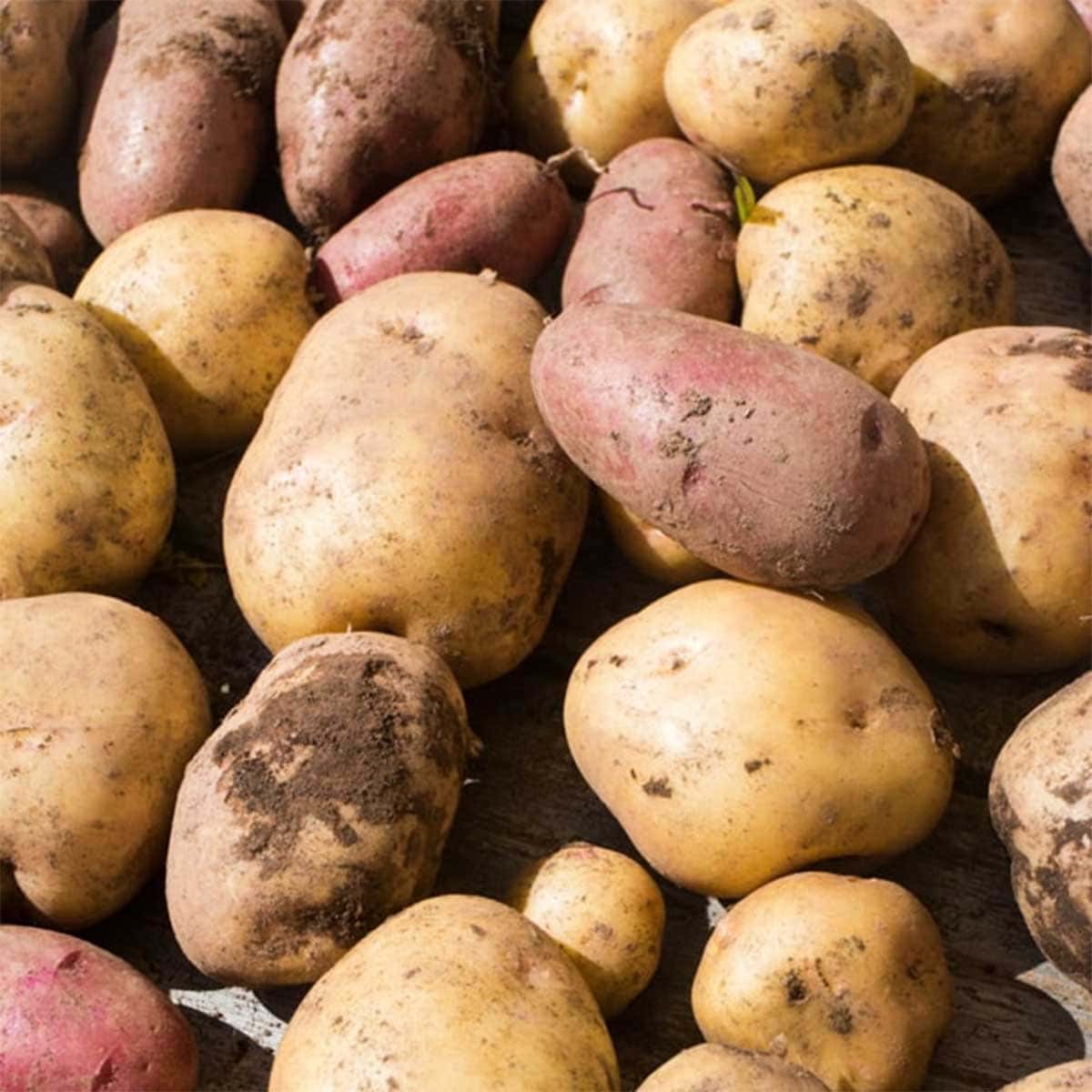
Plant Potatoes, Forget Them: Our 3-Month Harvest Surprise
Imagine planting a garden crop, covering it with soil, and then walking away for three months – no watering, no weeding, no special care whatsoever. Conventional gardening wisdom would suggest a barren patch, a wasted effort. But what if we told you that sometimes, the most neglected plants yield the most delightful surprises? This year, we decided to put the resilience of the humble potato to the ultimate test, and the results were nothing short of astonishing. We simply planted potatoes and came back 3 months later to a bountiful, unexpected harvest!
For years, when asked about the easiest vegetables to grow, our recommendations usually included garlic or kale. Now, after our recent experiment, there's a new contender for the top spot: potatoes. They might just be the most forgiving, low-maintenance crop you can cultivate, proving that sometimes, less truly is more in the garden.
The Unconventional Experiment: Planting and Forgetting
Our gardening focus this year was primarily in Brooklyn, leaving our Upstate plot feeling a little neglected. Longing to put some life into the Upstate beds, Matthew made a quick trip to plant a few seed potatoes. The plan was loose – hope to visit mid-summer, but life, as it often does, got in the way. Our schedules simply didn't align, turning a hopeful mid-season check-up into a complete absence for three long months.
This wasn't a calculated scientific study, but rather a happy accident born of circumstance. We prepared a small bed that wasn't being used for anything else, dug a series of holes, dropped in a variety of seed potatoes (both robust Red and creamy Yukon Gold), and covered them with soil. That was it. No pre-soaking, no elaborate soil amendments, no special trellises. We literally did *nothing* else. There was no regular watering schedule, no mounding of the dirt around the growing plants (a common practice to encourage more tubers and prevent greening), and certainly no weeding. The bed was left entirely to Mother Nature.
This experience redefined our understanding of "easy" gardening. If you're a busy gardener, a beginner intimidated by complex instructions, or simply curious about what happens when nature takes its course, this experiment offers a compelling answer. For more insights into just how effortlessly these tubers can thrive, explore our findings on
Potatoes: The Easiest Vegetable To Grow (We Prove It!).
Unearthing the Treasure: Our 3-Month Harvest Surprise
The day we finally returned to the Upstate garden was filled with a mix of anticipation and trepidation. Three months had passed since we planted potatoes and came back to check on them. Our initial reconnaissance left us disappointed. The bed was overgrown with weeds, and the potato plants themselves were nowhere to be seen, completely camouflaged by their wild companions. Matthew began digging tentatively, hoping for any sign of life, but still, nothing. "FIND THE POTATOES!" I anxiously urged, half-joking, half-desperate.
Then, with a little more determined digging, a glorious sight emerged from beneath the soil: dozens of beautiful, perfectly formed potatoes! It was a true "ta-da!" moment. The soil, once seemingly barren, was teeming with underground treasures. The joy of pulling out one potato after another, seeing their vibrant colors and varying sizes, was incredibly rewarding, especially considering the absolute zero effort we had put in.
It turns out that 90 days is a remarkably accurate average for potato growth, which was almost exactly the timeline of our unexpected harvest. Depending on the variety, this period can be slightly shorter or longer, but our Red and Yukon potatoes adhered to the schedule perfectly. Even our young garden helper, Enceladus, got in on the action (though she preferred dropping the unearthed potatoes into a basket rather than wielding a shovel herself!), marveling at the abundance. The size of some of the potatoes we unearthed was truly impressive, a testament to their incredible resilience.
The "Set It and Forget It" Potato Phenomenon
So, how did this miraculous harvest occur with absolutely no intervention? The "set it and forget it" success of our potato patch can be attributed to several factors inherent to the potato plant itself and the environment it thrives in:
*
Resilience and Root Systems: Potatoes are inherently robust plants. They develop extensive root systems that can delve deep into the soil, seeking out moisture and nutrients even in less-than-ideal conditions.
*
Natural Moisture: While we didn't water, Mother Nature certainly did. Regular rainfall over the three months provided sufficient hydration for the tubers to develop and swell. In many climates, potatoes can sustain themselves with natural precipitation, especially once established.
*
Underground Protection: Growing underground provides potatoes with a natural shield. It protects them from extreme temperature fluctuations, direct sunlight (which causes greening), and many surface pests. The soil acts as an insulator and a secure environment for tuber formation.
*
Nutrient Absorption: Given the soil quality of our Upstate beds, the potatoes likely had access to sufficient nutrients to fuel their growth without additional fertilization. Good initial soil is crucial for this kind of hands-off approach.
Our experience unequivocally proves that potatoes are "no nonsense." You can plant them, cover them with soil, and leave them undisturbed for months, and they will still produce. While a more attentive approach (like consistent watering and mounding) would likely result in a significantly higher yield and larger individual potatoes, our experiment demonstrates that a harvest is entirely possible even with benign neglect. It's a powerful lesson in trusting the plant and the natural processes of the earth.
Maximizing Your Potato Yields (Even if You *Don't* Forget Them)
While our "forget them" method delivered a delightful surprise, most gardeners aim for optimal yields. If you're inspired by our story but want to actively participate in nurturing your potato plants for an even more abundant harvest, here are some actionable tips:
*
Mounding (Hilling): This is perhaps the most important intervention. As potato plants grow, 'hill' soil or compost around the base of the stems, covering about two-thirds of the plant. Repeat this process several times as the plant grows. Mounding encourages the plant to produce more tubers along the buried stem and protects developing potatoes from sunlight, which can turn them green and inedible.
*
Consistent Watering: While our potatoes thrived on natural rainfall, consistent moisture is key for larger tubers. Aim for about 1-2 inches of water per week, especially during flowering and tuber development. Avoid erratic watering, which can lead to cracking.
*
Weed Control: Our experiment showed weeds won't kill your potatoes, but they definitely compete for water and nutrients. Regular weeding, especially when plants are young, helps them establish strong root systems.
*
Fertilization: Potatoes are heavy feeders. Incorporate balanced organic compost or a slow-release fertilizer into the soil before planting. Avoid high-nitrogen fertilizers once plants are established, as this encourages foliage growth over tuber development.
*
Variety Selection: Choose varieties suited to your climate and desired harvest time. Early-season potatoes (like some Red varieties) mature in 60-80 days, mid-season in 80-100 days (like our Yukon Golds), and late-season in 100-130 days.
*
Harvesting: Most main-crop potatoes are ready when the foliage begins to yellow and die back. For 'new potatoes,' you can gently dig around the plant earlier, taking a few small tubers while leaving the plant to continue growing.
*
Storage: Once harvested, cure potatoes in a cool, dark, well-ventilated space for a week or two to toughen their skins, then store them in a dark, cool (45-50°F / 7-10°C) place with good air circulation.
A common question that arises with such a hands-off approach is whether potatoes will return year after year. While potatoes are technically perennials, they are generally cultivated as annuals. If left in the ground, some may resprout next season, but the yield can be unpredictable and the plants may be more susceptible to disease. For consistent harvests, it’s best to replant seed potatoes each spring. For a deeper dive into whether potatoes naturally return, see our article on
Grow Potatoes Effortlessly: Do They Return Next Season?
A Culinary Challenge and a Gardening Revelation
Our 3-month harvest surprise was not just a successful gardening experiment; it was a revelation. It proved that potatoes are incredibly resilient and a fantastic choice for beginner gardeners, busy individuals, or anyone looking for a low-stress crop. This experience has us planning even bigger potato patches next year, perhaps even two full beds, knowing that Mother Nature is often our best ally.
Now, with baskets full of beautiful Red and Yukon potatoes, the delightful dilemma begins: what delicious recipes to make? From classic mashed potatoes and crispy roasted wedges to hearty potato salads, comforting gnocchi, or even a simple baked potato with all the fixings, the possibilities are endless. We hope our little potato journey inspires you to plant a few tubers yourself and maybe, just maybe, let them surprise you too!